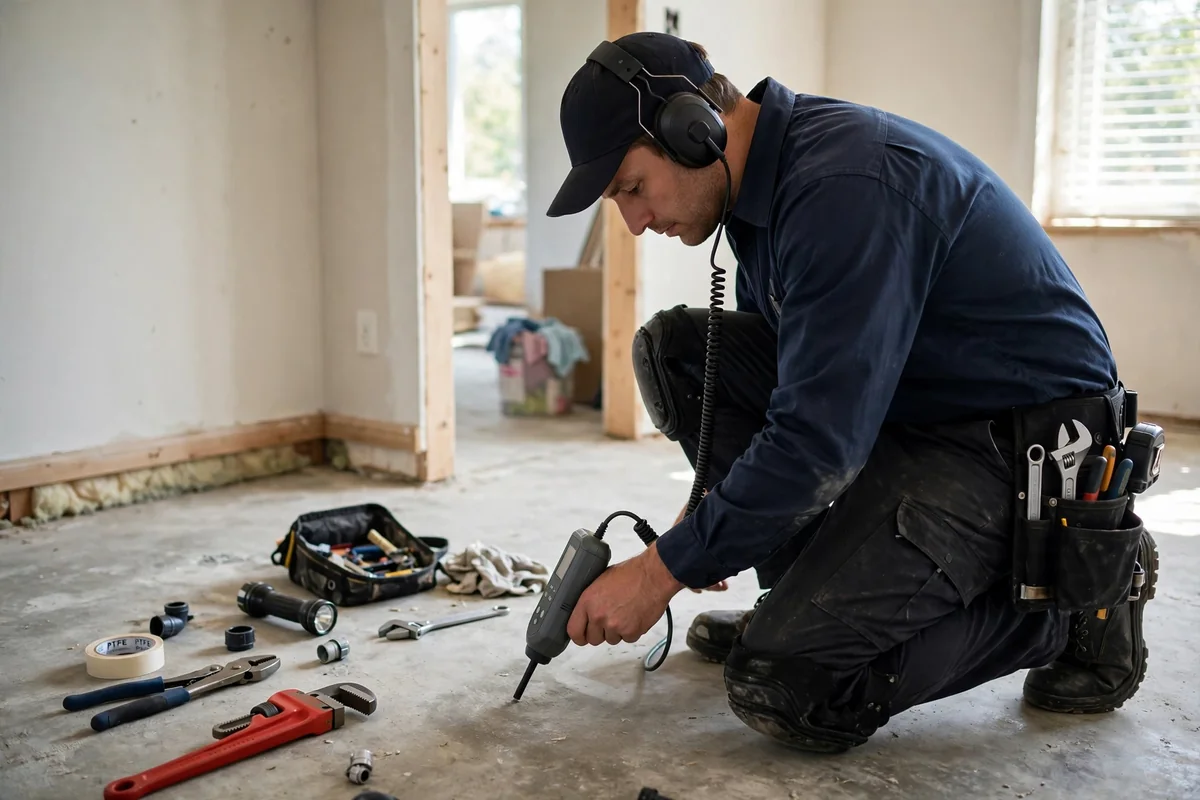
If you are dealing with hidden leaks under a concrete slab found without guesswork. in Springfield, don't guess at the cause. Warm spots on your floor, a water bill that keeps climbing, or dampness with no visible leak can point to a slab leak.
Warm spots on your floor, a water bill that keeps climbing, or dampness with no visible leak can point to a slab leak. In Springfield homes built on a concrete slab, a hot or cold water line runs under that slab, and when it leaks, water has nowhere obvious to go. It can soak the ground, crack flooring, and feed mould under the surface while you see only a small symptom inside.
Don't ignore the small signs. A slab leak left alone can damage flooring, baseboards, and the slab itself, and it wastes water every day it runs. Detection comes first: we test the system, check the meter, and narrow the leak to a section before any concrete is opened. That way the repair is targeted, not a hunt through your floor.
We explain what we find, where the leak sits, and what repair options make sense, including rerouting a line above the slab when that is the smarter long-term fix. You get an upfront price before any work begins.
Signs You Need Slab Leak Detection
- Warm spots on a floor: A warm patch, especially on a hard floor, can mean a hot water line is leaking under the slab.
- A water bill that jumps for no reason: Higher usage with no change in habits often means water is escaping underground.
- Damp carpet or flooring: Moisture that returns after drying, or flooring that buckles, can mark a slab leak.
- The sound of running water when taps are off: Hissing or running sounds with nothing in use deserve a meter test.
- Low water pressure in one area: A leak under the slab can steal pressure from nearby fixtures.
- Cracks in flooring or baseboards: Long-term moisture can lift tile, warp wood, and crack grout.
If you recognise any of these signs, call (615) 576-1152. Describing what you see helps us bring the right parts and give you a realistic arrival window.
What’s Included
- Meter and pressure testing
- Hot and cold line isolation checks
- Listening and moisture checks
- Pinpointing the leak section before opening concrete
- Repair of the leaking section
- Reroute options explained when they make sense
- Testing after repair to confirm the leak has stopped
- Drying and next-step advice
How We Fix It
Test the system
We check the meter with everything off and isolate hot and cold lines to narrow the leak.
Pinpoint the section
We use listening and moisture checks to locate the leak as closely as possible.
Explain options
We compare spot repair with rerouting, including disruption and long-term risk.
Repair and test
We complete the chosen repair and retest pressure and meter readings with you.
Advise on drying
We tell you what to watch for in flooring and walls while the area dries.
Repair or Replace? How We Help You Decide
| Option | Best when | Benefit | Trade-off |
|---|---|---|---|
| Spot repair | Leak pinpointed to one accessible section | Targeted fix, less disruption | Requires opening the slab at that spot |
| Reroute above slab | Line is old, corroded, or hard to reach | Avoids cutting the slab, easier future access | Longer pipe run; we explain the route first |
There is no one-size answer. We show you the condition of your fixture or pipe, explain both paths, and let you decide with an upfront price for each.
Safe Checks You Can Do First
You don't need tools for these, and you should stop if anything feels unsafe. If water is spreading, skip the checks and shut the water off first.
- Find the shut-off: look under the fixture, behind the toilet, or at the main shut-off where water enters your home. Turn it clockwise to close it. If a valve is stuck or corroded, don't force it, it can break and make the leak worse.
- Note what is affected: is it one fixture or the whole home? Is it hot water only, cold only, or both? That one answer tells us whether the fault is local or in a shared line.
- Don't reach for chemicals on a full blockage: chemical drain cleaners rarely clear a real blockage, they can damage older pipes and seals, and they make later professional work messier and less safe. Don't pour them into a drain that is already full or backing up.
- Don't ignore a bill spike or a new stain: a rising water bill with no change in use, a damp spot, or a musty smell is often a hidden leak. Catching it early usually means a smaller repair than waiting until a floor or wall is damaged.
If you smell gas at any point, don't stay inside to check pipes. Leave the home, don't flip switches, and call 911 or your gas utility from outside.
What Affects the Cost of Slab Leak Detection
We don't publish a fixed price for this job, because the same symptom can have very different causes. After diagnosis, you get an upfront price for the work you choose, before we start. These are the factors that shape it:
- Access: how easy it is to reach the pipe, valve, or fixture, and whether walls, floors, or a yard trench are involved.
- Parts: the specific part or fixture needed for your home, including its brand and quality. A small cartridge and a full replacement are very different jobs.
- Condition: corroded, frozen, or previously repaired pipe can add steps, and a line that has been patched before may need a longer-lasting fix.
- Depth and length: for underground or sewer work, depth, length, and soil access matter more than the symptom you see inside.
- Urgency: emergency work outside regular hours means immediate response, which is a different job from a scheduled visit.
- Repair or replace: sometimes a lasting replacement costs more now but less over time than repeated repairs. We show you both paths honestly when both are realistic.
Springfield Notes for Slab Leak Detection
- Based on Memorial Blvd: we work from 2717 Memorial Blvd in Springfield, the Robertson County seat, so most Springfield homes are a short drive away and we can give you a realistic arrival window.
- Older homes near the courthouse square: Springfield was laid out in 1798 and its downtown Public Square is a historic district, so older homes nearby often still have aging pipe, original fixtures, and valves that have not been touched in years. That history changes how we diagnose hidden leaks under a concrete slab found without guesswork..
- Hard water across Middle Tennessee: mineral scale builds up in heaters, aerators, and pipes here, so a problem that looks like one faulty part can be part of wider scale. We check for that instead of swapping a part and leaving.
- Freeze and root risk: winter cold snaps test pipes in crawl spaces and exterior walls, and mature trees send roots into older sewer joints. If your hidden leaks under a concrete slab found without guesswork. problem keeps coming back after a simple fix, tell us, because the cause may be freeze damage or roots, not the fixture itself.
When you call, it helps to say roughly how old your home is and whether you are on city water or a well/septic system, if you know. Those two facts often point straight to the right diagnosis.
Photos From This Kind of Job
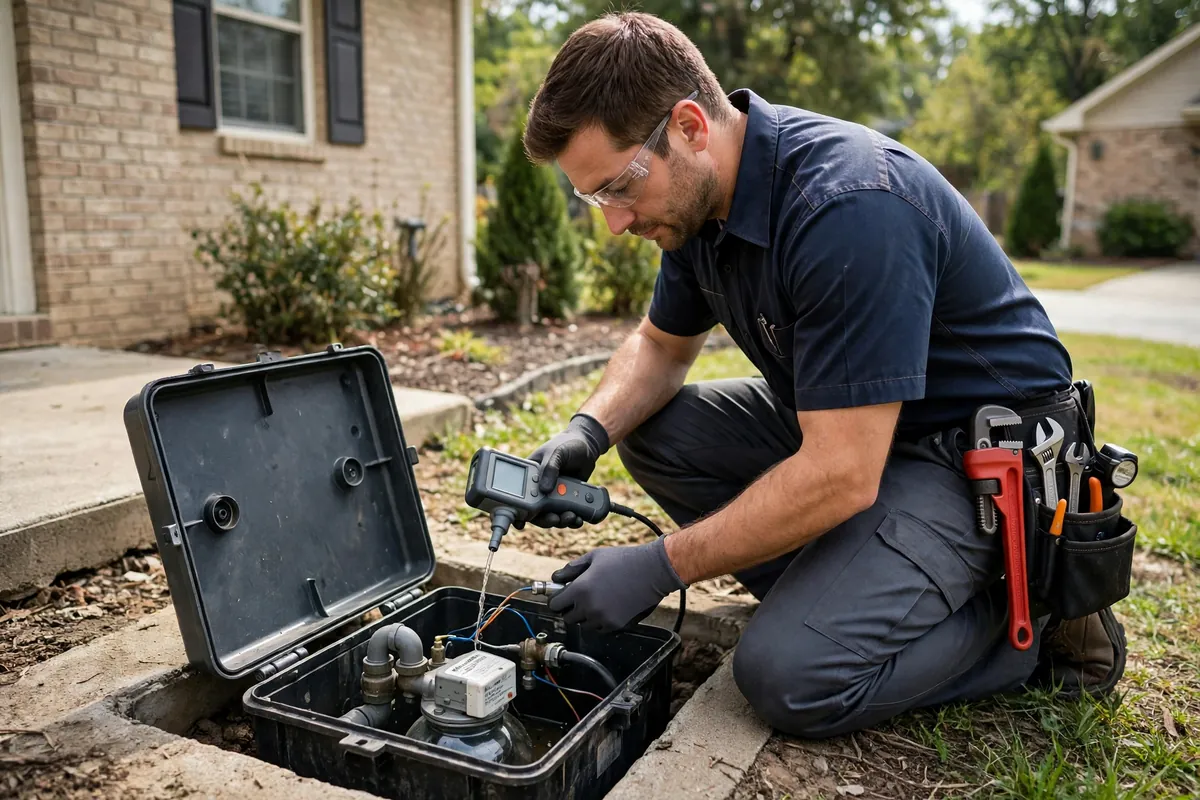
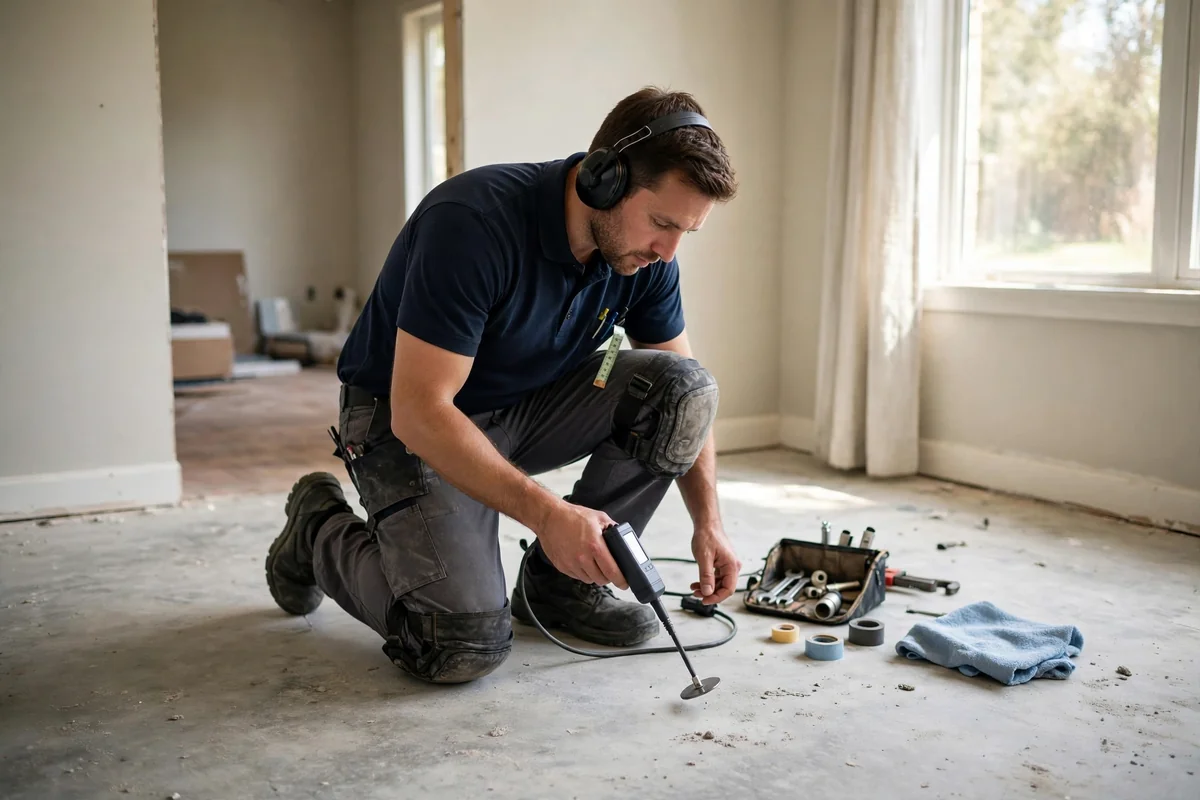
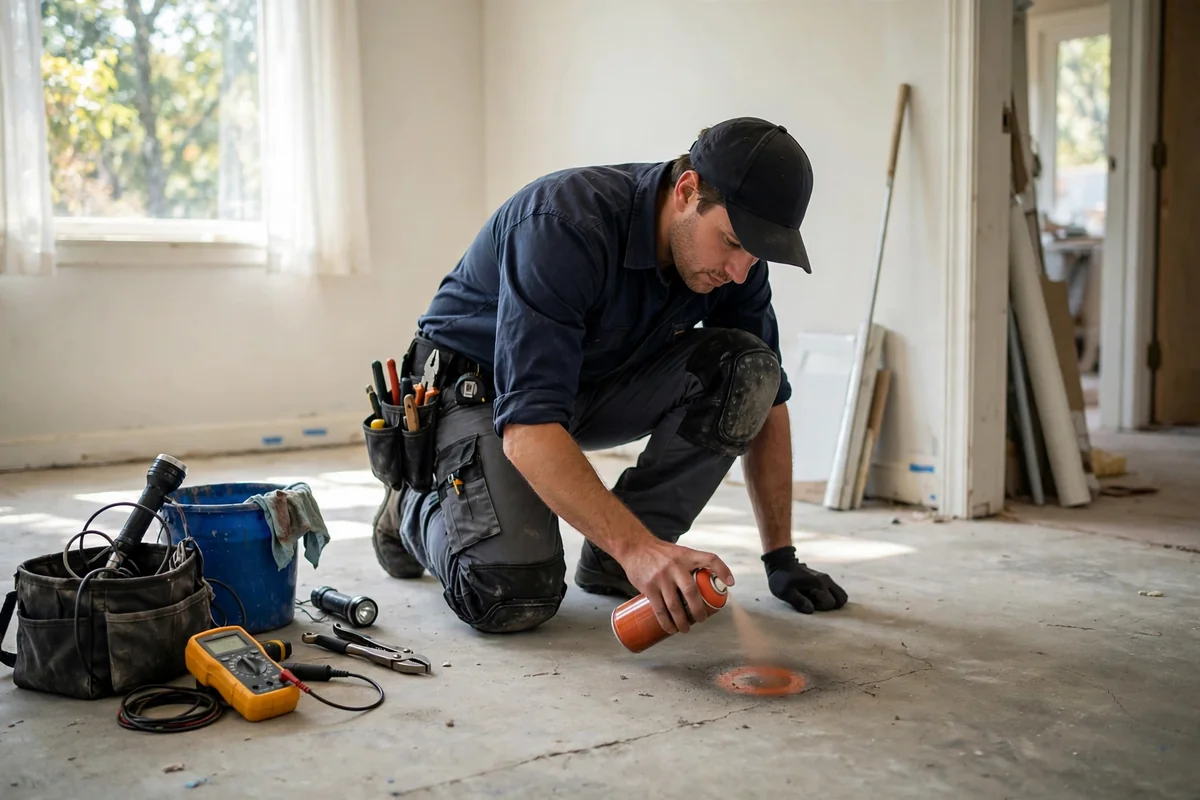
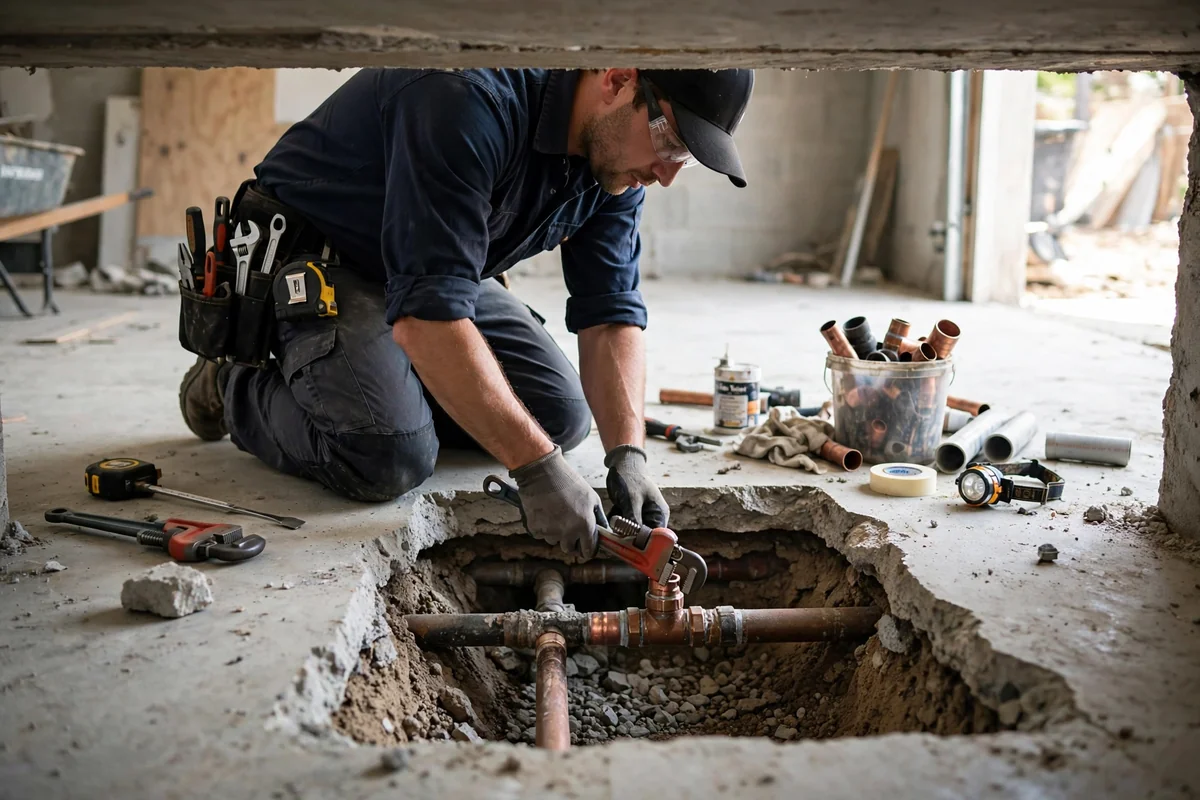
These photos show the kind of work involved. They are illustrative photos of plumbing work, not photos taken inside a specific customer home.
What to Do Before We Arrive
If water is leaking, find the nearest shut-off valve - under a sink or toilet, or the main shut-off where the water line enters your home - and turn it clockwise to stop the flow. Move rugs, towels and valuables away from the wet area, and do not use the affected fixture until it has been checked. If a drain is backing up, avoid running more water into it. If you smell gas, do not stay inside to look for a valve: leave the home, do not flip light switches, and call 911 or your gas utility from outside.
When you call (615) 576-1152, it helps to tell us what you see, hear and smell, when the problem started, and whether it is getting worse. Clear a little space around the fixture or water heater if you can do so safely. We will explain what we find, what options you have, and the upfront price before any work begins, and we test the repair with you before we leave.
Emergency or Can It Wait Until Morning?
Call right away, day or night, for active flooding, a burst pipe, sewage backing up into the home, no water at all, a gas smell, or a water heater leaking heavily. These problems cause damage quickly and should not wait. A slow drip from a faucet, a toilet that runs occasionally, or a drain that is slow but still draining can usually wait for a scheduled visit during our regular hours - but if you are unsure, call (615) 576-1152 and describe it. We would rather help you judge it early than have a small problem become a large repair.
Local Plumbing Service in Springfield
We are based at 2717 Memorial Blvd, Springfield, TN 37172, so we know Springfield homes: older homes with aging galvanized or cast-iron lines, newer subdivisions with modern fixtures, well and municipal water systems in the surrounding area, and the hard-water mineral buildup that is common across Middle Tennessee. That local knowledge matters because the right fix depends on your home's age, pipe material, water pressure and fixtures - not just the symptom you see.
Our service area includes Springfield 37172 and nearby Greenbrier 37073, White House 37188, Cross Plains 37049, Portland 37148, Cedar Hill 37032 and Adams 37010, plus Springfield neighbourhoods including Autumn Hills, Canterbury Estates, Meadowbrook Estates, Forest Park Estates and Tennessee Trails. When you call, tell us your town or neighbourhood so we can give you a realistic arrival window and bring the parts most likely needed for homes like yours.
Related Services, Places, and Guides
Related services:
Main Water Line Replacement
The line from the street to your home replaced properly.
Backflow Prevention Testing
Protecting clean water from flowing backward into the supply.
Outdoor Faucet and Hose Bib Repair
Leaking, frozen, or dripping outdoor faucets fixed.
Nearby places we serve:
Plumber in Greenbrier, TN
Local plumbing in Greenbrier 37073.
Plumber in White House, TN
Local plumbing in White House 37188.
Related guides:
Why Your Drain Keeps Clogging - and How to Stop It
Recurring clogs explained.
Frequently Asked Questions
Will you have to break up my whole floor?
No, not if we can help it. Detection first narrows the leak, so any opening is targeted. Rerouting is sometimes offered precisely to avoid cutting the slab.
How do you know it is a slab leak and not something else?
Meter and pressure tests confirm water is escaping, and isolation checks show whether it is a hot or cold line. Those tests come before any concrete work.
Is a slab leak an emergency?
It should be investigated promptly. Even a slow slab leak wastes water and damages flooring over time. Call and describe the signs, and we will help you judge urgency.
Can a slab leak be repaired from outside?
Sometimes, depending on where the line runs and where the leak sits. We explain the access options after detection, not before.
What happens to the flooring afterward?
We explain what opening, if any, is needed and what restoration it involves before work begins, so there are no surprises.
Can I fix slab leak detection myself, or should I call a plumber?
Some small checks are fine, like cleaning an aerator, checking a shut-off, or using a plunger on a simple clog. But if water is spreading, sewage is involved, gas is involved, or the problem keeps coming back, call a plumber. A wrong guess can turn a small slab leak detection job into water damage, and we would rather help you judge it on the phone than have you pay twice for the same problem. Call (615) 576-1152 and describe what you see, and we will tell you honestly whether it is a safe DIY check or a job for a visit.
What should I tell you when I call about slab leak detection?
Tell us what is happening, where it is, when it started, and whether it is getting worse. Say whether other fixtures are affected, roughly how old your home is, and whether you are on city water or a well/septic system if you know. If you can, tell us the brand or model on the fixture, and whether the problem started suddenly or has been building up. Those details help us bring the right parts and give you a realistic arrival window.
Further Reading
Emergency Plumbing Repair
Flooding, burst pipes and sewage backups - 24/7 help.
Drain Cleaning
Slow, clogged or gurgling drains cleared properly.
Sewer Line Repair
Sewer backups, breaks and root damage repaired.
Sewer Camera Inspection
See inside the line before you pay for a repair.
Water Heater Repair
No hot water, leaks or strange noises fixed.
Tankless Water Heater Installation
Endless hot water and space-saving installation.
Also see Plumbing Cost Guide, Our Process, Common Plumbing Problems, and Plumbing Emergency: What to Do.
Brands We Service
We work on fixtures and equipment from all major brands, including:
Need a plumber in Springfield, TN?
Call now for fast, local help - including 24/7 emergency plumbing. We explain the problem and the upfront price before work begins. No contact form needed: just call.
SCHEDULE SERVICE · (615) 576-1152
2717 Memorial Blvd, Springfield, TN 37172 · Mon–Fri: 7AM – 7PM · Sat: 8AM – 4PM · 24/7 Emergency